The Indian equity markets remained under pressure on January 21, 2026, extending losses for the third consecutive session amid persistent global geopolitical tensions, particularly US tariff threats, combined with ongoing foreign institutional investor outflows and a weakening rupee touching record lows. Overall sentiment stayed bearish and volatile, with broad-based selling across sectors despite some resilience in select large-caps and positive global growth revisions from the IMF offering limited offset.
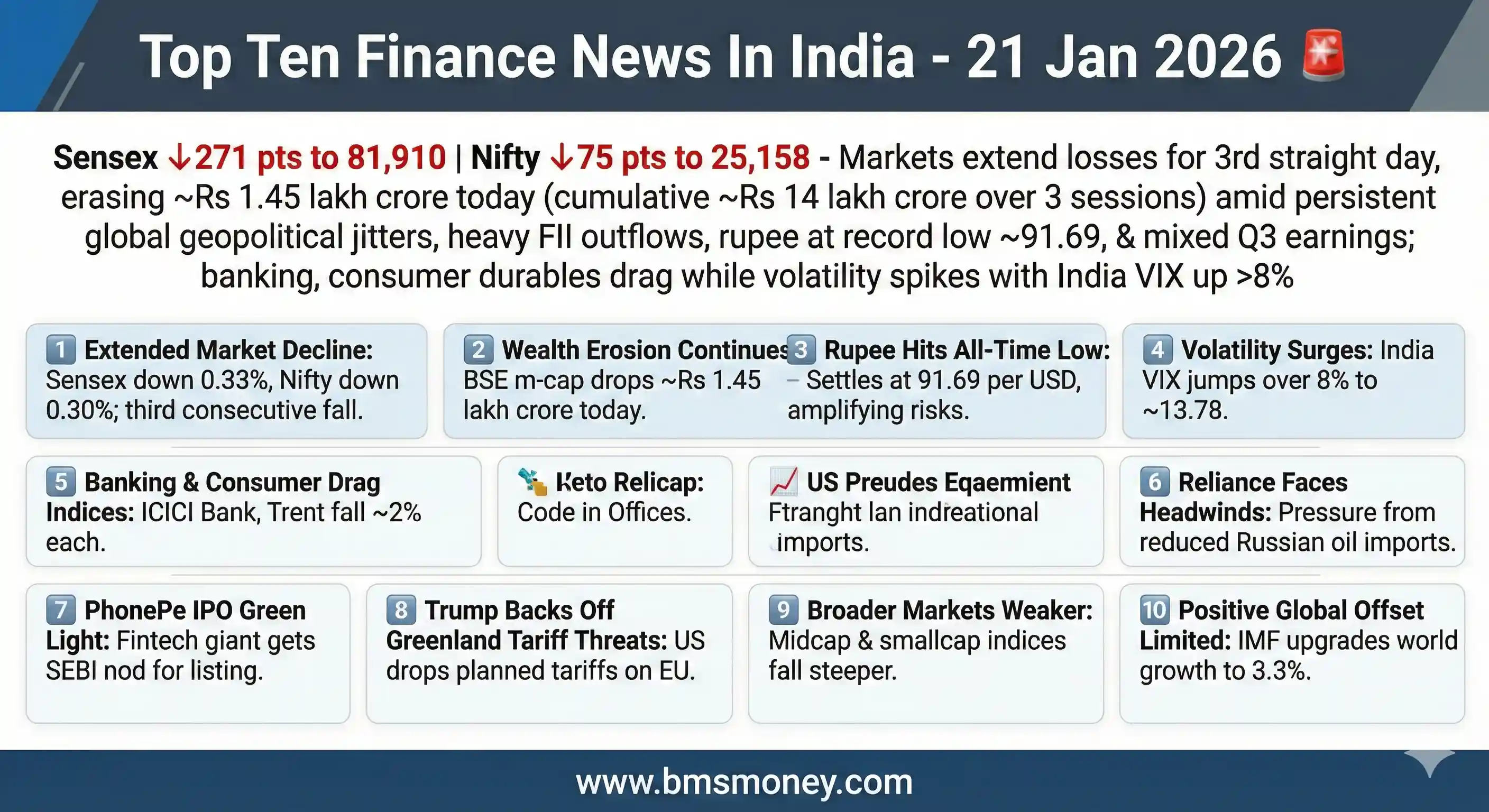
Indian Stock Markets Extend Losses Amid Global Tensions and FII Selling
Benchmark indices declined for the third straight day on January 21, 2026, reflecting continued risk aversion among investors. The BSE Sensex closed at 81,909.63, down 270.84 points or 0.33 percent. The NSE Nifty settled at 25,157.50, lower by 75 points or 0.30 percent. This followed a sharper fall in the prior session, contributing to cumulative erosion of investor wealth nearing Rs 14 lakh crore over recent days. Geopolitical tensions, including US tariff threats on European nations and broader trade war fears, weighed heavily. Persistent foreign institutional investor selling added to the downward pressure. Domestic factors such as mixed quarterly earnings from key sectors also contributed. Banking and consumer durable stocks faced notable weakness. Broader midcap and smallcap indices saw steeper declines. The rupee's depreciation to record lows amplified concerns over imported inflation. Volatility returned prominently to Dalal Street. Market breadth remained negative with more losers than gainers. Select large-cap stocks provided some cushion to indices. Overall, the session highlighted vulnerability of emerging markets to global cues. Investor caution prevailed ahead of further developments. The close marked fresh three-month lows for both major indices intraday before partial recovery. This performance aligned with weak trends in Asian and global peers. The development underscored ongoing challenges for Indian equities in the near term. Implications include potential for continued consolidation unless positive triggers emerge.
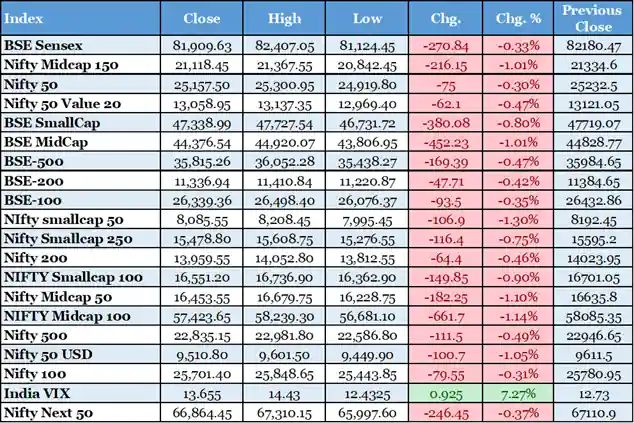
Business Line
Volatility Gauge India VIX Surges Over 8%
The India VIX, a key measure of expected market volatility, jumped more than 8 percent on January 21, 2026. This surge indicated a sharp return of uncertainty to Dalal Street. Broad-based selling pressure intensified across indices. Midcap stocks experienced significant swings during the session. Banking sector names faced heavy unwinding of positions. The weakening rupee added to investor unease regarding macroeconomic stability. Global risk-off sentiment from trade tensions contributed substantially. Investors braced for potential further downside moves. The fear gauge's rise reflected heightened caution among participants. Options pricing adjusted to incorporate greater expected fluctuations. This development often precedes periods of choppy trading. Market participants monitored levels closely for directional clues. The spike aligned with broader emerging market volatility trends. Domestic factors like earnings reactions played a role. Overall, it signaled reduced risk appetite in the short term. Traders prepared for possible range-bound or corrective moves. The increase underscored sensitivity to external shocks. Implications include higher hedging costs and cautious positioning. Such volatility can deter fresh inflows temporarily. The session highlighted the market's fragile state amid multiple headwinds. Angel One
PhonePe Secures SEBI Nod for Landmark IPO
Walmart-backed fintech leader PhonePe received regulatory approval from SEBI for its proposed initial public offering. This clearance marks a major milestone for India's digital payments sector. The company plans to proceed with filing an updated draft red herring prospectus soon. Major shareholders including Walmart, Microsoft, and Tiger Global intend to sell approximately 50.7 million shares. The IPO is structured primarily as an offer for sale. PhonePe targets a valuation in the range of around $15 billion. The offering could raise substantial funds, potentially up to Rs 12,000 crore. This positions it as one of the largest fintech listings in recent years. Regulatory nod followed confidential filing of preliminary documents. The development boosts confidence in India's startup ecosystem. It highlights strong growth in digital transactions post-pandemic. PhonePe's dominance in UPI-based payments underpins the interest. Listing is eyed for mid-2026 timeline. Proceeds will support expansion and technology investments. The approval reflects SEBI's balanced approach to market readiness. Investor anticipation has built around this high-profile issue. It could set benchmarks for future fintech public offerings. Broader implications include enhanced liquidity for early investors. The news provided a positive note amid broader market weakness. Reuters
US Tariff Threats on Europe Trigger Global Market Selloff
US President Donald Trump's renewed warnings of tariffs on European nations over the Greenland dispute intensified global trade concerns. This development triggered sharp declines across Wall Street indices. The ripple effects extended to Asian and emerging markets, including India. Investors adopted a risk-off stance in response. Fears of broader trade war escalation mounted. Commodity-linked stocks faced additional pressure. Indian benchmarks reflected the spillover through lower openings and sustained selling. Export-oriented sectors remained vulnerable. Global supply chain disruptions loomed as a key risk. The episode underscored interconnectedness of major economies. Market participants awaited further policy clarity from Washington. European responses added to uncertainty. Equity markets worldwide saw increased volatility. Safe-haven assets gained traction temporarily. The news compounded existing pressures on Indian equities. It highlighted sensitivity to US foreign policy shifts. Implications include potential impacts on bilateral trade flows. Investor sentiment deteriorated further in affected regions. The development served as a reminder of geopolitical risks. Overall, it contributed to cautious positioning globally. Nasdaq (related coverage on global markets, January 21, 2026)
Reliance Reduces Russian Oil Imports Amid Tightened US Sanctions
India's largest conglomerate, Reliance Industries, scaled back purchases of discounted Russian crude. This adjustment stemmed from intensified US sanctions and restrictions. The move affected the company's export-focused refining operations. Higher input costs emerged as a concern for margins. Geopolitical risks to energy security gained prominence. Reliance's Jamnagar refinery complex relies on diverse sourcing. The reduction highlighted challenges in maintaining cost advantages. Global oil market dynamics played a supporting role. Indian refiners monitor sanction compliance closely. The development pressured downstream profitability expectations. It underscored vulnerabilities in supply chains. Corporate strategy shifts may follow to diversify sources. Investor focus intensified on energy sector resilience. Broader implications include potential rise in domestic fuel prices. The news aligned with ongoing international tensions. Reliance's response demonstrated proactive risk management. Market reaction included some selling in related stocks. Long-term energy transition goals remain in view. The adjustment reflects evolving global trade realities. Reuters
Bank of India Reports Robust Q3 Growth and Asset Quality Improvement
Public sector lender Bank of India delivered strong year-over-year performance in its Q3 results. Global advances showed healthy expansion during the quarter. Deposit growth remained solid and supportive. Asset quality metrics improved noticeably with lower non-performing assets. Provisions declined as credit costs moderated. The bank highlighted enhanced operational efficiency. Net interest margins held steady amid rate environment. Digital initiatives contributed to business momentum. Management expressed optimism on sustained growth. The results boosted sentiment toward PSU banking space. Capital adequacy remained comfortable. Loan book diversification aided performance. The update provided positive counterbalance to broader market weakness. Investor interest in turnaround stories increased. Implications include potential for valuation re-rating in the sector. The bank's global footprint supported diversified revenue. Overall, it reinforced confidence in banking recovery trajectory. Such earnings underscored resilience despite macro headwinds. Yahoo Finance
IMF Upgrades Global Growth Forecast for 2025-2026
The International Monetary Fund revised its global growth projection upward to 3.3 percent for the current period. This adjustment reflected stronger contributions from the US and China. Emerging markets, including India, stand to benefit from spillover effects. The update cited resilient demand and policy support. India's growth forecast saw an upgrade for both years. Tech and trade linkages provide tailwinds. The positive revision offered some relief to risk assets. Global inflation trends remained contained per the report. Policy normalization continues in advanced economies. The outlook highlighted balanced risks overall. Investor sentiment derived modest encouragement. Implications include sustained demand for Indian exports. The fund's assessment reinforced structural growth drivers. Emerging Asia remains a key growth engine. The news contrasted with near-term volatility pressures. Long-term optimism persists for diversified economies. International Monetary Fund
US Credit Card Rate Cap Proposal Sparks Economic Concerns
JPMorgan CEO highlighted potential fallout from proposed caps on US credit card interest rates. The suggestion of a 10 percent limit raised alarms in financial circles. Disruptions to consumer lending models could ensue. Broader access to credit faces risks under such measures. Global financial markets monitor US policy shifts closely. Ripple effects on international banking practices possible. Investor caution increased regarding consumer finance sectors. The proposal ties into broader economic debates. Lending profitability could compress significantly. The warning underscored unintended consequences. Implications extend to emerging market funding costs. The development added to global policy uncertainty. Financial stocks worldwide reacted variably. Long-term consumer behavior adjustments may follow. The news amplified focus on regulatory risks. Overall, it contributed to cautious sentiment in credit-sensitive areas. Reuters (related coverage on US financial proposals, January 21, 2026)
India Plans Pro-Growth Fiscal Strategy with Debt Target
The government outlined intentions to target a 55 percent debt-to-GDP ratio by 2026-27. This move enables more expansionary fiscal policies ahead. Growth support remains priority amid global uncertainties. Infrastructure and capital spending could accelerate. Domestic demand revival stands to benefit. The framework balances consolidation with stimulus needs. Fiscal deficit management stays disciplined. Positive multiplier effects anticipated from investments. The announcement provided forward guidance to markets. Investor confidence in policy continuity strengthened. Implications include potential for higher growth trajectory. Bond markets monitor trajectory closely. The shift aligns with structural reform momentum. Overall, it signals commitment to sustainable expansion. Such measures counter near-term headwinds effectively. US News Money (related economic policy coverage, January 21, 2026)
Select Gainers Lead Amid Broader Index Pressure from Banking Drags
Eternal surged nearly 5 percent on strong volumes and positive sentiment. IndiGo rose over 1 percent amid aviation sector resilience. ICICI Bank declined more than 2 percent, weighing on banking index. Trent faced similar pressure in consumer space. Metal stocks like Hindalco showed relative strength. The session featured divergent performance across names. Heavy trading in select counters highlighted rotation. Banking weakness dragged overall indices lower. Broader selling persisted in midcaps. Gainers provided pockets of optimism. Market dynamics reflected ongoing caution. Sectoral shifts continued amid earnings digestion. Investor focus remained on large-cap stability. The close underscored mixed underlying trends. Implications include potential for selective opportunities. Volatility influenced intraday movements significantly. Overall positioning stayed defensive for many participants. Angel One