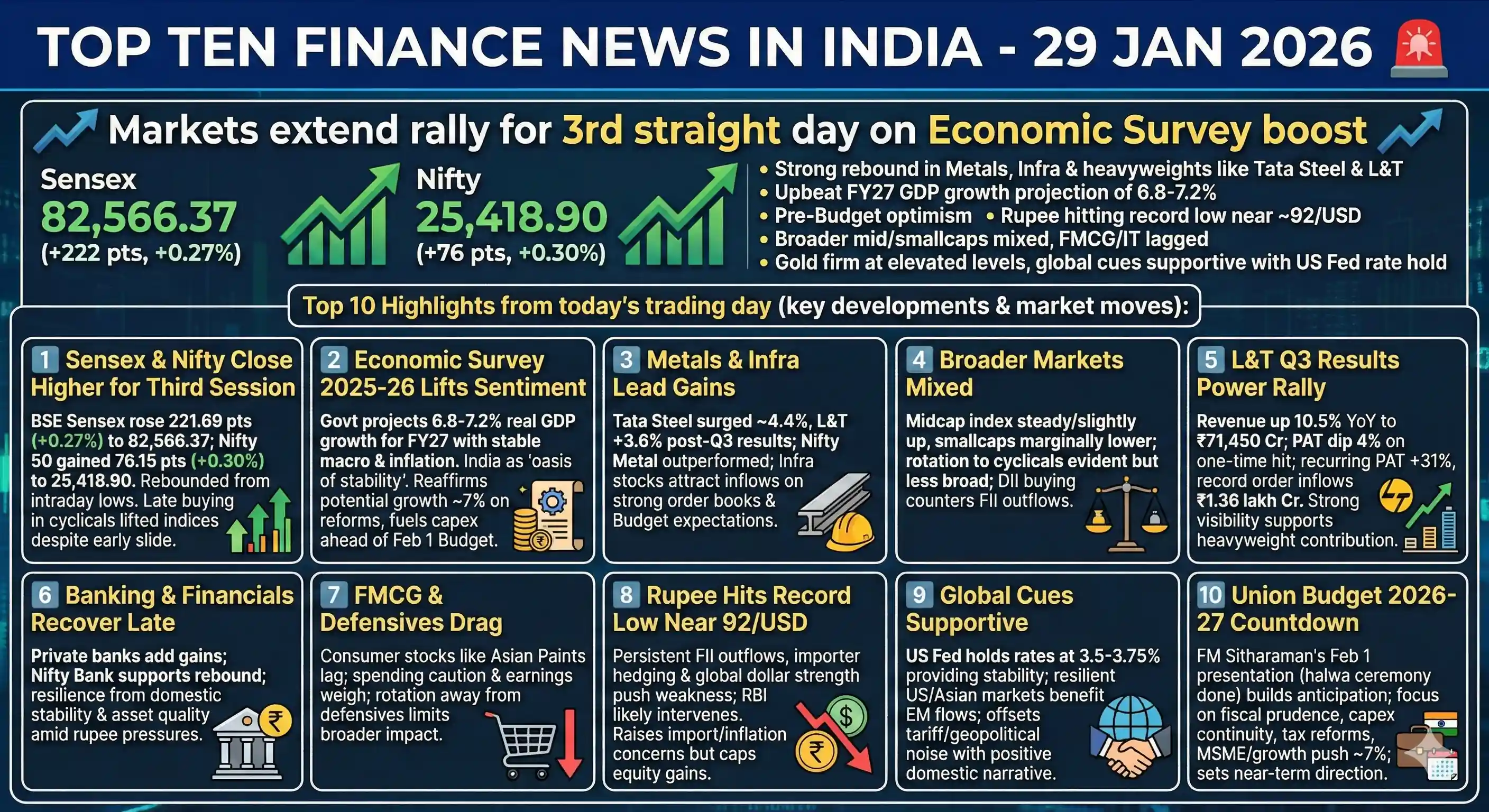
Indian equity markets suffered a severe Budget-day crash on February 01, 2026, with indices recording their worst performance in nearly seven years after the Union Budget proposed a sharp hike in the Securities Transaction Tax (STT). Despite a pro-growth capex push, panic over reduced derivatives liquidity triggered aggressive selling across financials, eclipsing all positive fiscal announcements and igniting extreme volatility.
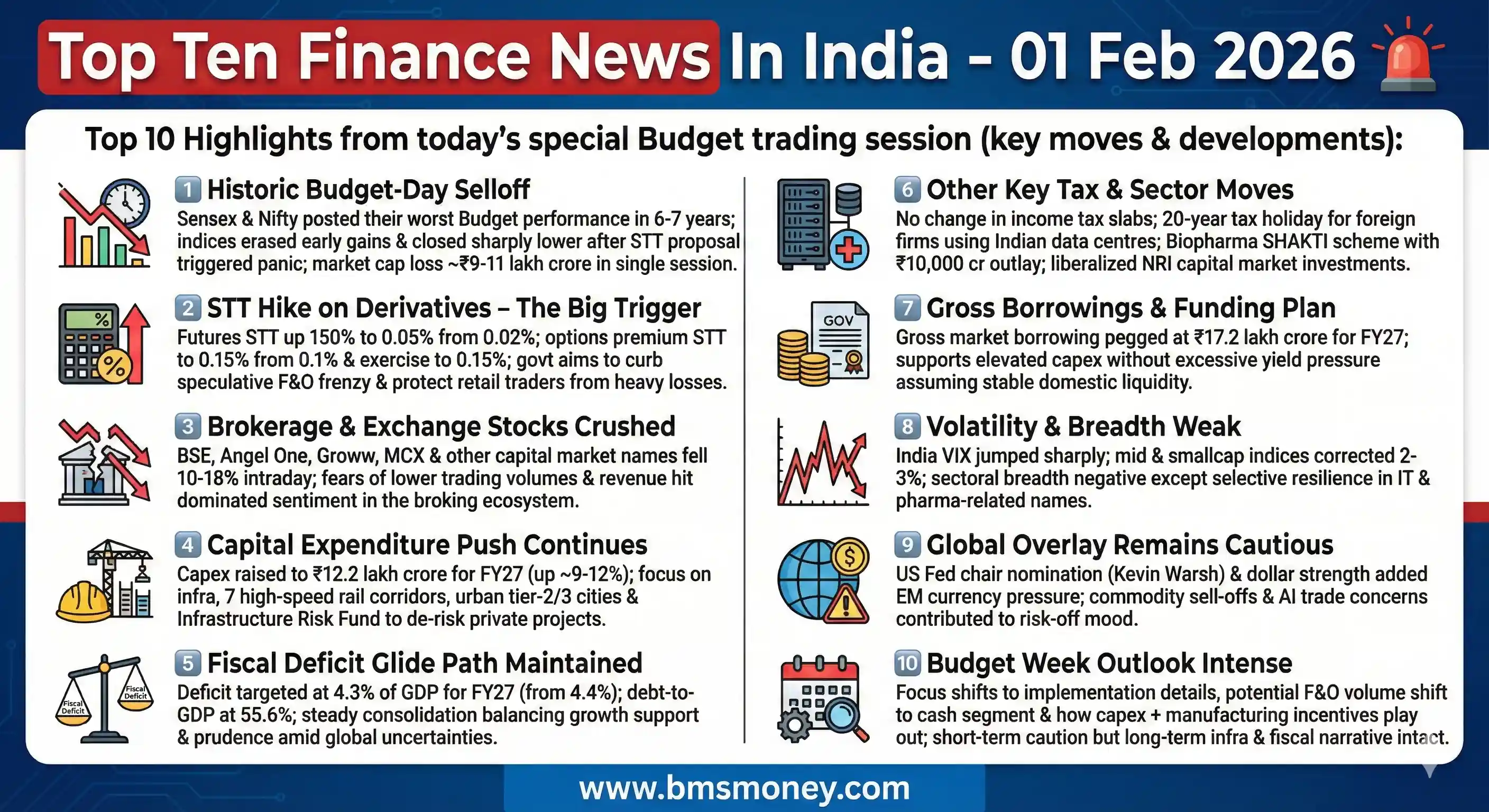
Indian equity markets closed lower on January 30, 2026, as pre-Budget caution and sustained foreign outflows snapped a three-day rally. Despite domestic optimism, rupee weakness and mixed global cues led to profit booking, overshadowing positive developments like rising forex reserves and the approval of a long-awaited NSE IPO.
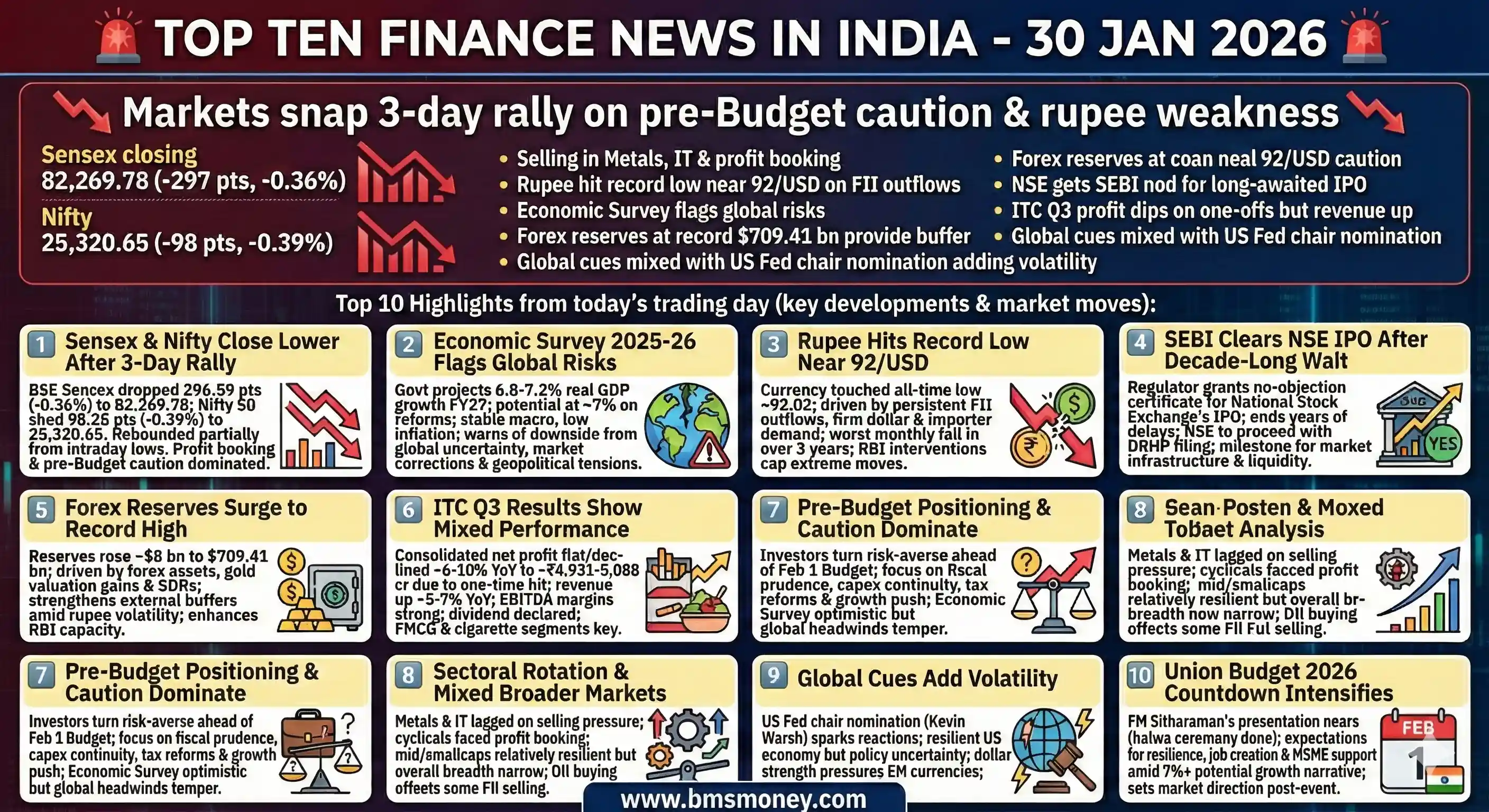
Indian markets exhibited cautious optimism on January 29, 2026, edging higher after a supportive Economic Survey projected robust GDP growth, though gains were limited by the rupee hitting a record low and mixed corporate earnings. Strength in metals and infrastructure sectors drove the indices, while investor sentiment balanced domestic fiscal hopes against persistent global headwinds.